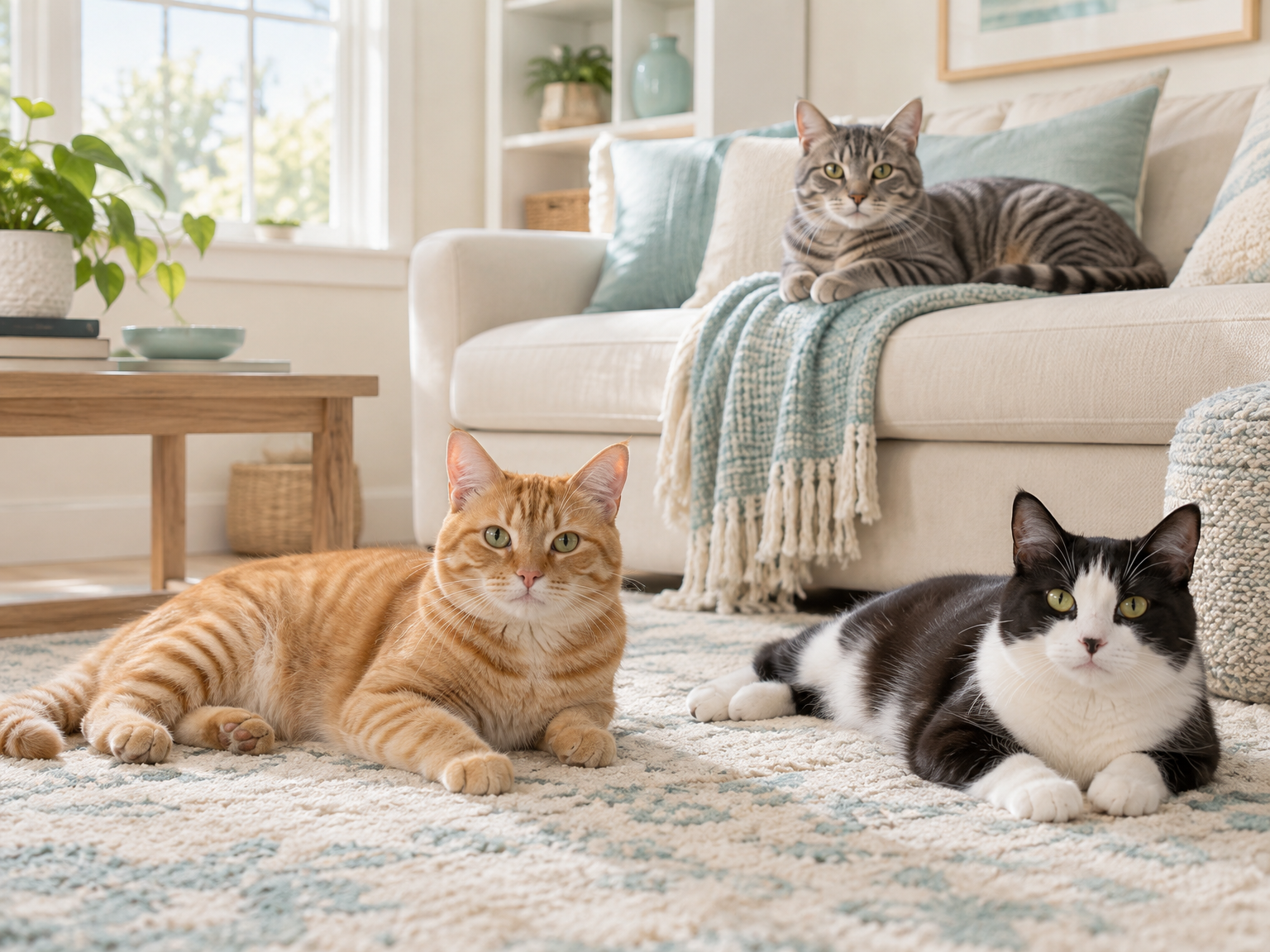
Living with multiple cats can be wonderful—and occasionally feel like managing a tiny household full of very opinionated roommates. A calmer multi-cat home often comes down to giving each cat choices: where to eat, where to rest, where to play and when to have a little space.
Small changes can make everyday life easier for everyone. Start with your cats' basic resources and pay attention to how each cat actually uses your home.
1. Spread Out the Important Stuff
Food, water, litter boxes and favorite resting spots don't all need to be grouped together. In a multi-cat home, spreading important resources around the house can give cats more choices and help prevent one cat from controlling access to everything.
When possible, offer feeding or drinking options in more than one location. Separate feeding areas can also make it easier to notice changes in an individual cat's appetite or routine.
2. Create Comfortable Places to Retreat
Even cats that get along well may appreciate some alone time. Provide comfortable resting options in different areas and at different heights.
A cozy bed, covered hideaway, window perch, cat tree or quiet chair can give a cat somewhere to settle away from household activity. Make sure those spaces are easy to enter and leave so another cat can't block the only way out.
3. Give Cats More Than One Way Around
Watch how your cats move through your home. Narrow hallways, doorways and areas around food or litter boxes can become uncomfortable if one cat regularly occupies the space.
Clear pathways and multiple routes through frequently used areas can make it easier for cats to move around without feeling cornered. Vertical space—such as sturdy cat trees or appropriate shelves—can also provide additional choices.
4. Make Time for Individual Play
Not every cat enjoys the same toys or style of play. One may love chasing a wand toy while another prefers batting a mouse across the floor or solving a food puzzle.
Short individual play sessions can give each cat attention without requiring everyone to compete for the same toy. Let your cats show you what they enjoy, and put away toys that require supervision when playtime ends.
5. Keep the Litter Box Setup Practical
Litter boxes are an especially important resource in a multi-cat household. A commonly recommended starting guideline is one litter box per cat, plus one additional box, although your cats and your home's layout may require a different setup.
Place boxes where cats can reach them easily and avoid forcing a cat to pass another cat to get to the only available box. Regular scooping also makes it easier to notice changes in litter-box habits.
A Quick Multi-Cat Home Check
Ask yourself:
• Can every cat easily reach food and water?
• Does each cat have comfortable places to rest?
• Are there enough litter-box options?
• Can cats move away from one another without becoming trapped?
• Does each cat have opportunities for play and attention?
• Have you noticed changes in appetite, litter-box habits or interactions?
Small Changes Can Make a Big Difference
There isn't one perfect setup for every multi-cat household. Your cats' personalities, ages, routines and relationships are different from anyone else's.
Observe how your cats use the space you already have and make changes gradually. Sometimes moving a food bowl, adding another resting spot or creating a better escape route can make everyday life noticeably easier.
If you notice persistent conflict or a sudden change in behavior, appetite or litter-box habits, consider talking with your veterinarian or a qualified feline behavior professional.
Leave a Reply