Buying cat toys can be surprisingly confusing. One toy flashes, another chirps, another looks like a mouse—and your cat may ignore all three in favor of the cardboard box they arrived in.
The trick isn't finding the fanciest toy. It's figuring out what appeals to your cat's natural behaviors and individual preferences. Movement, sound, texture, size and even how you play with the toy can matter more than price.
1. Start With How Cats Like to Play
Many types of cat play resemble parts of hunting behavior: watching, stalking, chasing, pouncing, grabbing and kicking.
Different toys encourage different parts of that sequence. A wand toy can dart and change direction like moving prey. A toy mouse can be chased and carried. A kicker toy gives a cat something larger to grab with the front paws and kick with the back feet.
Instead of asking which toy is "best," ask which kind of play your cat seems to enjoy most.
2. Does Toy Color Matter?
Color can matter, but probably not in the way it matters to us. Cats don't see the full range of colors that humans do. They are generally better at distinguishing blues and yellowish tones than reds and greens.
That doesn't mean you need to buy only blue and yellow toys. Contrast, movement, shape and location can also influence how noticeable a toy is.
A toy that stands out against your flooring or furniture may be easier for your cat to follow than one that blends into the background.
3. Sound Can Be Exciting—or Annoying
Crinkles, rattles, squeaks and electronic chirps can make toys more interesting for some cats. Other cats may be cautious around sudden or loud noises.
If your cat is curious about sound, try toys with different levels and types of noise rather than assuming louder is better. A soft crinkle or gentle rattle may be plenty.
Pay attention to your cat's response. Approaching, stalking and batting suggest interest. Repeatedly backing away, hiding or avoiding the toy may mean that particular sound isn't appealing.
4. Movement Often Matters More Than Fancy Features
Cats are often attracted to movement, especially motion that changes speed or direction.
This is one reason a simple wand toy can be so engaging. Instead of waving it directly in your cat's face, try moving it away, around a corner or briefly behind furniture. Let your cat watch, stalk and pounce.
For interactive or motorized toys, look for movement patterns that aren't completely predictable. At the same time, make sure the toy is appropriate for your cat and follow the manufacturer's instructions for safe use and supervision.
5. What About Lights and Lasers?
Lights can attract attention, but flashing lights aren't automatically more enriching than toys your cat can physically chase, grab or kick.
Laser pointers can encourage running and chasing, but the light itself can never be physically caught. If you use one, avoid shining it into your cat's eyes and consider ending the session by directing play toward a physical toy or treat your cat can actually capture.
Lights can be one part of play, but they don't need to be the main feature when choosing enrichment.
6. Don't Forget Texture
Cats explore toys with their paws, mouths and whiskers, so texture can make a big difference.
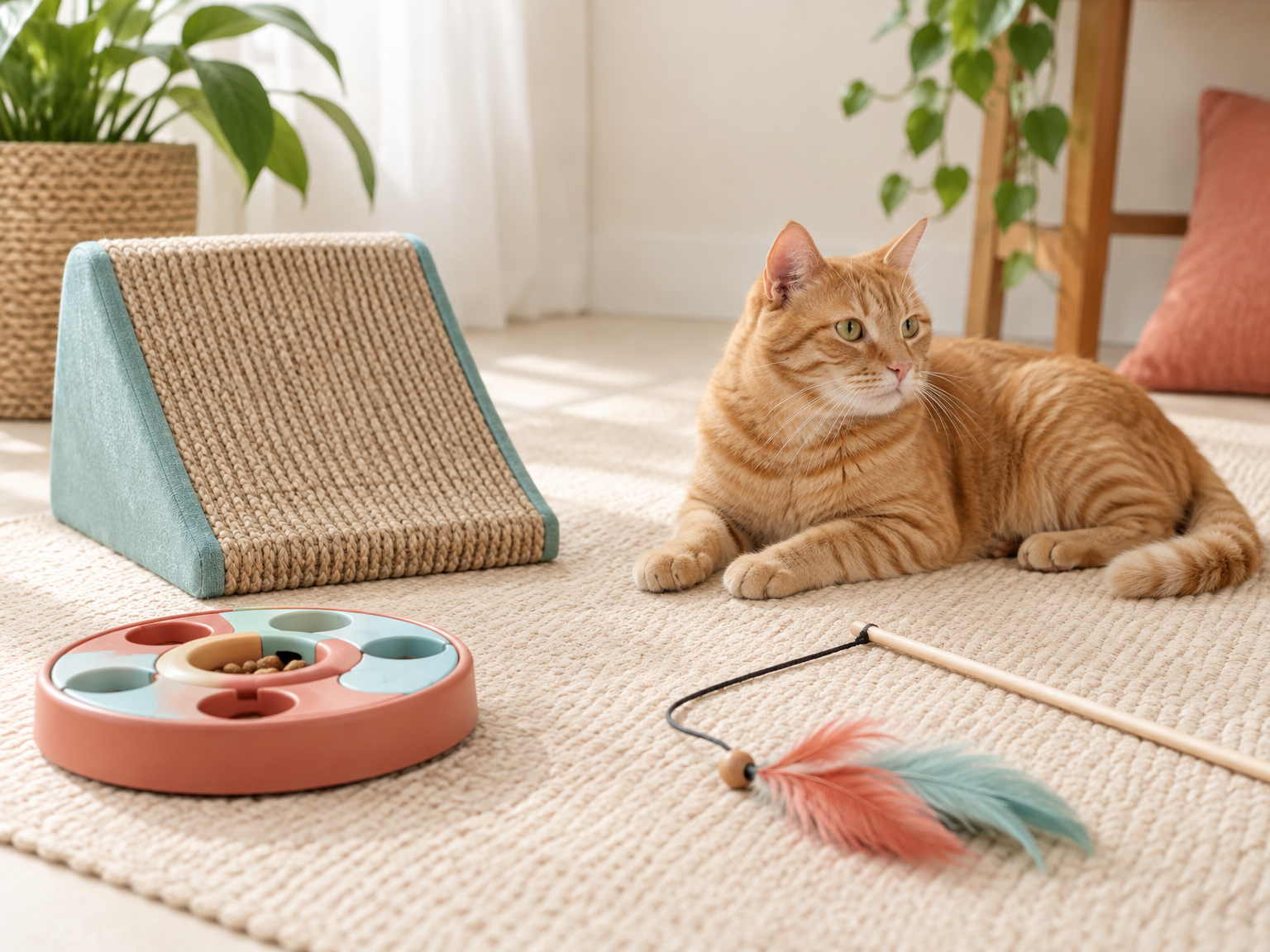
Some cats enjoy soft plush toys. Others prefer cardboard, sisal, fabric, feathers or crinkly materials. Scratchers are another good example: one cat may love corrugated cardboard while another heads straight for sisal.
Offering a few different textures can help you discover what your cat actually prefers before buying multiples of the same thing.
7. Match the Toy to the Cat
Age, size, mobility, confidence and personality all influence play.
A highly active cat may enjoy energetic chase games, while another may prefer a puzzle feeder or slower-moving toy. Senior cats can still enjoy enrichment, but comfortable, accessible play may be more appropriate than activities requiring repeated high jumps.
In a multi-cat home, preferences can differ dramatically. A toy that fascinates one cat may do absolutely nothing for another—and that's perfectly normal.
8. Rotation Can Make Old Toys Interesting Again
You don't necessarily need an enormous toy collection.
Try keeping some toys available while storing others out of sight, then rotate them periodically. Reintroducing a familiar toy after it has been put away for a while may make it interesting again.
Rotation also helps you notice which toys consistently earn enthusiasm and which ones nobody misses.
9. Safety Comes Before Novelty
Before buying a toy, look at how it is constructed and how your cat will use it.
Check toys regularly for loose pieces, damaged strings, exposed stuffing or other wear. Toys with strings, cords, feathers or small detachable components may require supervision and should be stored appropriately when playtime is over.
Follow the manufacturer's use and care instructions, and replace damaged toys rather than trying to stretch their lifespan.
Quick Cat Toy Selection Checklist
Before buying a new toy, ask:
• Does this match the way my cat likes to play?
• Is the movement likely to encourage stalking, chasing or pouncing?
• Is the sound gentle enough for my cat's preferences?
• Does the toy offer an interesting texture?
• Is it an appropriate size for my cat?
• Can my cat physically catch, grab or interact with it?
• Does it require supervision?
• Is it sturdy enough for the way my cat plays?
• Do I already own something similar that I could rotate back into play?
The Best Toy Is the One Your Cat Actually Enjoys
You don't need the most expensive, colorful or technologically advanced toy to keep a cat engaged. Often, the best enrichment comes from understanding what your individual cat enjoys and offering safe opportunities to stalk, chase, pounce, scratch, explore and problem-solve.
Experiment with different movements, sounds and textures, rotate toys to keep things interesting, and let your cat's behavior guide your choices.
And if that carefully researched new toy loses to the cardboard shipping box? Consider the box part of the enrichment plan.
Leave a Reply